
Metrology

Metrology
Science of measurement and its application
Mathematics: mean value, standard deviation
Arithmetic mean value
Sum of measurement values divided by number of measurements.

- x0 - mean value
- xi - measurement value of the ith measurement
- n - number of measurements
Experimental standard deviation
Gives dispersion of measurement results

- s - experimental standard deviation
- x0 - mean value
- xi - measurement value of the ith measurement
- n - number of measurements
Normal Distribution
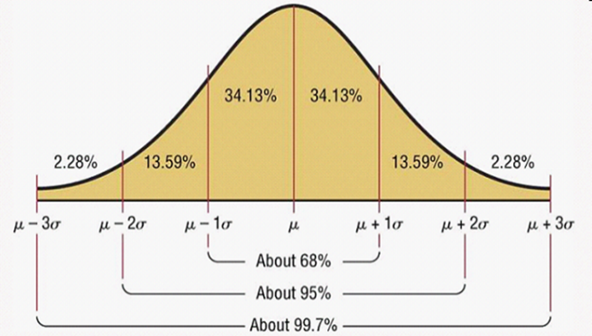
- ~ 68% of the values from a normal distribution are within one standard deviation from the mean μ
- ~ 95% of the values are within two standard deviations
- ~ 99.7% lie within three standard deviations
Measurement error
Measurement error measured value minus reference value
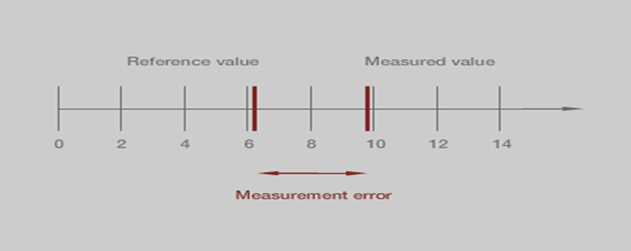
Random and systematic measurement errors
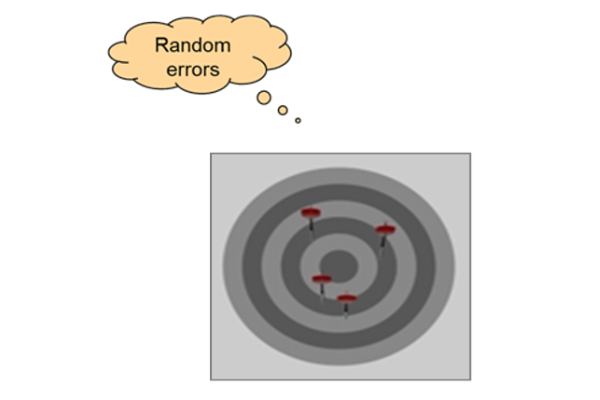
Random Error
Unpredictable fluctuations of measurement results
Mean value = 0
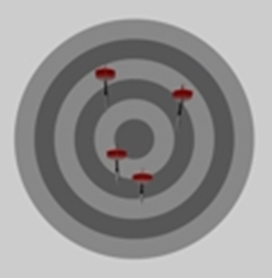
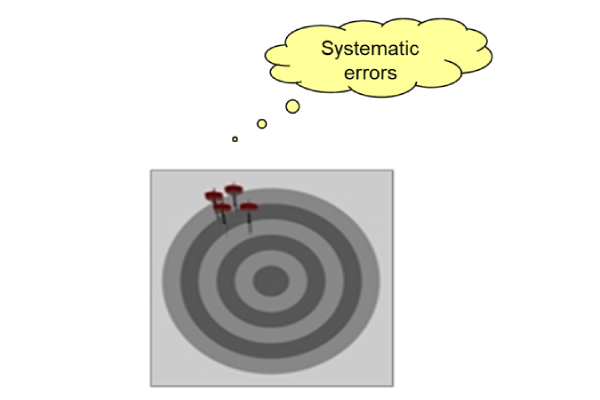
Systematic Error
Mean of measurements differs from reference value
Mean value ≠ 0

Accuracy and precision
What is better: accuracy or precision?
Bad Precision Good accuracy
Good Precision Bad accuracy
Precision
How close are the measurement results to each other?
High precision = small random errors.
Precision = independant of true value

Accuracy
How close is measurement result to true value?
Accurate = free from systematic error.
Where is the correct reference value?

Precision in numbers
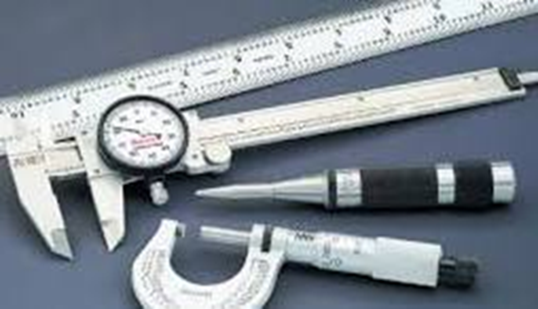
Repeatability s.d.
Reproducibility s.d.
Accuracy in numbers
For measurements: Uncertainty of measurement
For instruments: Maximum permissible error
Repeatability and reproducibility
Repeatability
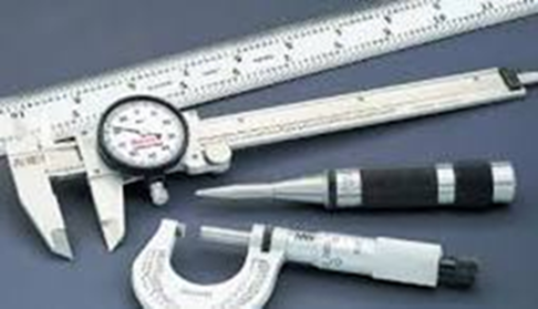
Capability of measurement instrument to give under same measurement conditions results, which are close to each other
Ideal conditions => minimum dispersion of results
Repeatability conditions:
Same measurement procedure
Same operator
Same measuring instrument, used under the same condition
Same location
Repetition over a short period of time
Uncertainty of measurement
Reproducibility
Capability of a measurement instrument to give measurement results close to each other under changed measurement conditions.
Such conditions => maximum dispersion results
Reproducibility conditions:
- Principle of measurement
- Method of measurement
- Operator
- Reference standard
- Location
- Condition of use
- Time
Example: Proficiency test - inter laboratory test / round robin test
Uncertainty of a measurement
Interval within which the true value is expected
Example: l = (1.32 ± 0.21) cm or l = 1.32 (1 ± 0.16) cm
Uncertainty of measurement includes
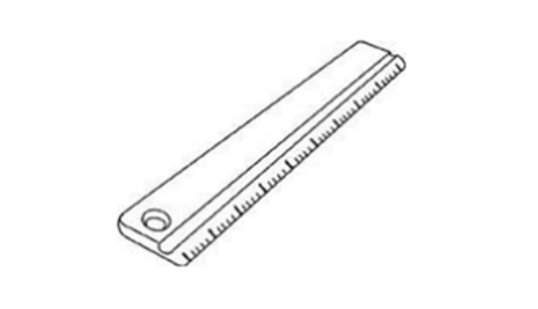
- Instrumental measurement uncertainty
- Uncertainty of calibration standards
- Uncertainty due to measurement process (sample preparation, sample filling, etc.)
Evaluate the uncertainty of measurement
Type A:
Measurements under repeatability conditions
Type B:
Assumptions based on experience or other information
Resolution and accuracy
Which weighing scale is more accurate?
Bad Resolution
65 Kg

Good Resolution
65.183 Kg
But no information about the accuracy!!
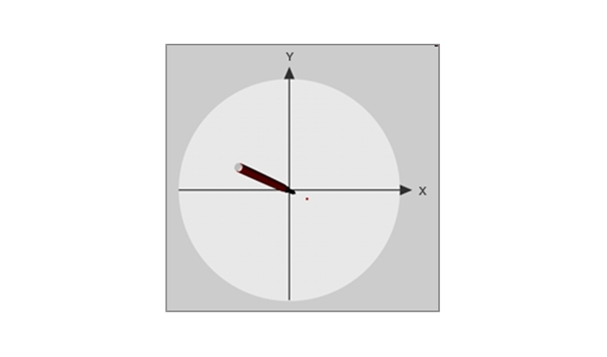
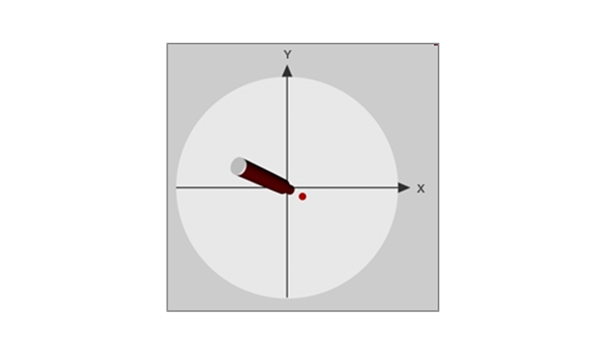
Resolution
Ability to resolve differences
High resolution = resolve small differences
The accuracy can never be better than its resolution!
Good Resolution
Bad Resolution
Calibration and adjustment
Calibration
Compare achieved measurement results with standard reference value
Validate the quality of measurements and adjustments
Adjustment
Change instrument constants to get correct measurements, to eliminate systematic measurement errors
Adjustment after calibration depending on tolerance range